Ask a Toronto homeowner whether a heat pump can keep up in January and you will often hear the same doubt: “It will stop working when it gets really cold.” That belief made sense a couple of decades ago, but the technology has changed. Today, a ductless heat pump in a Toronto winter can deliver reliable heat, provided the equipment is designed for cold weather and installed correctly.
This guide explains how ductless heating in winter actually works, what happens when temperatures drop below zero, and what to check before you commit. If you want a broader look at the equipment first, see our page on the ductless heat pump in Toronto.
The Short Answer: Yes, With the Right Equipment
Modern cold climate mini split models are built to keep heating at outdoor temperatures well below freezing. Many are rated to operate down to around -25°C, and some continue to deliver useful heat even colder. Toronto winters, with average January temperatures a few degrees below zero and cold snaps that can drop well below -15°C, are within the operating range of these units.
The key phrase is “cold climate.” A standard builder-grade heat pump is not the same as a cold climate model. Choosing the right one, and sizing it correctly, makes all the difference.
How a Heat Pump Heats When It Is Cold Outside
It Moves Heat Instead of Creating It
A heat pump does not burn fuel or use electric resistance to make heat. It uses refrigerant to absorb heat from outdoor air and move it inside. Even when the air feels freezing to us, it still contains thermal energy that the system can extract.
Inverter Compressors Adjust to the Weather
Cold climate units use variable-speed inverter compressors. Instead of switching fully on and off, they ramp up in cold weather and slow down when the demand is light. This keeps temperatures steady and improves efficiency.
Efficiency Drops as It Gets Colder
Every heat pump becomes less efficient as the outdoor temperature falls. That is normal. The goal is to choose a model whose efficiency and output remain strong at Toronto’s typical winter temperatures, not just on a mild day.
Heat Pump Winter Performance in Toronto: What Changes Below Freezing
Capacity Falls With Temperature
The heating output of any heat pump declines as outdoor temperatures drop. Cold climate models are engineered so that the decline is gradual and a large share of their rated capacity remains available at -15°C. When comparing models, look for capacity ratings at low temperatures instead of relying on the headline number.
Defrost Cycles Are Normal
When moisture in the air freezes on the outdoor coil, the system periodically runs a short defrost cycle to melt it.
What You May Notice During Defrost
- A cloud of steam rising from the outdoor unit.
- A brief pause in warm airflow from the indoor unit.
- Slight changes in sound as the compressor and fan switch modes.
These are normal. If the outdoor unit is encased in ice or the cycle seems constant, that is a sign to call a technician.
Heating Below Freezing vs. Deep Cold Snaps
Most Toronto winter days sit comfortably within a cold climate unit’s range. During the rare deep cold snaps, output is lower, which is why correct sizing and, in some homes, backup heat are important.
What to Look For in a Cold Climate Mini Split
Not every unit marketed as a heat pump suits heating-dominant climates. When comparing options, check the following:
- Rated low-temperature capacity: the manufacturer should publish heating output at -15°C or colder.
- Low ambient operation: look for a stated operating range down to about -25°C.
- Cold climate designation: independent cold climate listings help verify performance.
- Base pan heater and defrost design: these features reduce ice buildup in winter.
- Quiet, modulating compressor: better comfort and lower energy use.
Manufacturers such as Mitsubishi Electric, Fujitsu, Daikin, LG and Panasonic all offer cold climate lines. Equipment quality matters, but installation quality matters just as much. You can learn what proper installation involves on our heat pump installation page.
Sizing and Installation Matter More Than the Brand
The Risk of an Undersized Unit
An undersized heat pump struggles on the coldest nights and may rely on backup heat more than expected. A proper heat loss calculation for each room avoids this problem, and it is the first thing Go Ductless Inc. does before recommending a system.
Outdoor Unit Placement
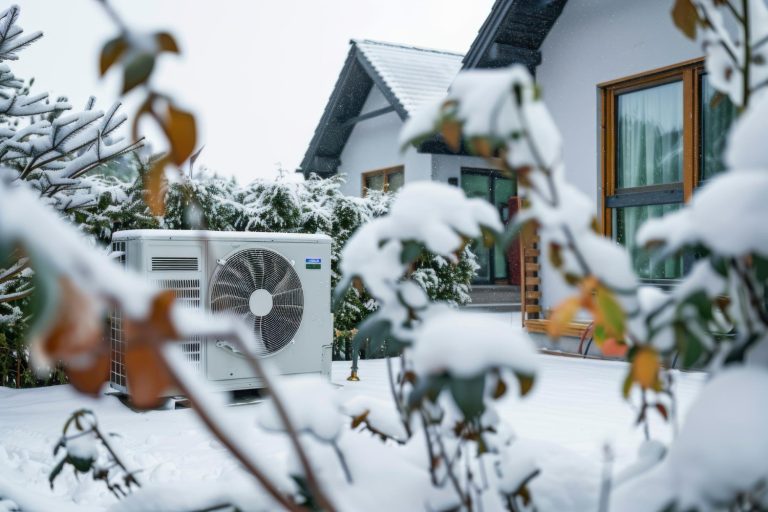
Snow, ice and wind affect a heat pump’s performance. Good installers place the outdoor unit with winter in mind.
Placement Checklist for Toronto Winters
- Raise the unit on a stand or wall bracket above expected snow depth.
- Keep clear of roof edges where snow and icicles can fall.
- Allow the manufacturer’s recommended clearances for airflow.
- Avoid spots where drifting snow collects against the unit.
Do You Still Need a Backup Heat Source?
It depends on the home and on how you plan to use the system. Many Toronto homeowners use ductless heat pumps for most of their heating and keep an existing furnace or baseboard heat as backup for extreme cold.
Hybrid Setups
In a hybrid arrangement, the heat pump handles heating during the majority of the season, and the furnace takes over only when it gets extremely cold. This approach lowers fuel use while providing peace of mind. It also means your furnace should be maintained. If it has trouble, our guide to common furnace not heating problems in Toronto can help you spot the warning signs.
Whole-Home vs. Partial Heating
Some homes rely on ductless heating in winter for the entire house. Others use it for specific areas, such as a basement, addition or poorly heated bedroom. Your layout, insulation level and comfort expectations help determine which approach suits you.
Winter Operating Tips for Better Performance
- Set a steady temperature: large overnight setbacks force the system to work hard in the morning.
- Keep the outdoor unit clear: remove snow and ice from around it, never chipping at the coil.
- Clean filters regularly: dirty filters reduce airflow and efficiency.
- Use heat mode and a moderate fan speed: auto fan settings usually deliver the best balance.
- Schedule annual maintenance: a fall tune-up catches small issues before the cold arrives.
Will a Ductless Heat Pump Save Money in Winter?
Heat pumps are far more efficient than electric resistance heating, so they usually cut electricity use significantly where baseboards are in place. Compared with natural gas, savings depend on current energy rates, your home’s insulation and how much of the load the heat pump carries. A quote that includes a heat loss estimate helps you project realistic running costs. Also check current rebate and incentive programs, since they change from time to time.
Is a Ductless Heat Pump Right for Your Toronto Home?
Ductless heat pumps are especially useful in older homes without ductwork, finished basements, additions and homes with hot and cold rooms. They provide cooling in summer from the same equipment, which is a bonus in a city where July and August can be uncomfortable.
Go Ductless Inc. has served Toronto for more than 10 years. That experience helps us recommend cold climate equipment that matches your home rather than a one-size-fits-all system.
Final Thoughts
A ductless heat pump can work in a Toronto winter when it is a true cold climate model, sized properly and installed with winter conditions in mind. The technology has caught up with the climate, and the right design gives you steady comfort even below freezing.
Want to know if a heat pump fits your home? Get a free estimate from Go Ductless Inc. or call (647) 916-9114 and our team will walk you through your options
Frequently Asked Questions
1. Can a ductless heat pump work at -20°C?
Many cold climate models are rated to operate at -20°C and even colder, though heating output is lower than on a mild day. Correct sizing ensures the system still meets your needs.
2. Is a heat pump in cold weather less efficient?
Yes, efficiency declines as temperatures fall, but cold climate heat pumps remain more efficient than electric resistance heating at most winter temperatures.
3. Why is my outdoor unit steaming or covered in frost?
Light frost and steam during defrost are normal. If heavy ice builds up and does not clear, contact a technician.
4. Do I need to keep my furnace?
Not always. Some homeowners keep it as backup for extreme cold, while others rely on the heat pump alone. A site assessment from Go Ductless Inc. can help you decide.
5. Does a ductless heat pump also provide air conditioning?
Yes. The same system reverses in summer to cool your home, so one installation covers both seasons.