Getting ductless AC bedroom placement right is the difference between a room that feels crisp and quiet and one that feels drafty, uneven, or annoyingly noisy at night. Bedrooms are unique because comfort expectations are higher, airflow is more noticeable when you are lying still, and small layout choices like bed position, door swing, and closet walls can change how air circulates. In this guide, Go Ductless Inc. explains ductless AC bedroom placement in a practical, homeowner friendly way so you can choose a spot that supports comfort, efficiency, and long term reliability.
The goal of ductless AC bedroom placement is simple: deliver steady cooling and dehumidification without blasting air directly on sleepers, without short cycling, and without creating hot corners. That means you want clean airflow across the room, a sensible height and clearance, and a location that makes installation and service straightforward. The best ductless AC bedroom placement also considers noise, condensate routing, and how the indoor unit will “see” the load in the room so it can regulate temperatures accurately.
How Bedroom Layout Changes Ductless AC Bedroom Placement
Bedrooms have predictable patterns that heavily influence ductless AC bedroom placement. Beds typically sit against one wall, nightstands and lamps create little airflow barriers, and doors to hallways often remain closed for privacy. All of that can cause stagnant areas where cooled air never reaches, or it can cause a cold jet of air to hit the bed if the unit is aimed poorly. If you start with the room’s “sleep zone” and the room’s “air path,” ductless AC bedroom placement becomes much easier to get right.
Another bedroom specific issue is what people do at night. Many homeowners lower the set temperature, use heavier bedding, and keep doors and curtains closed. Those habits change how the system senses temperature and humidity, and they can make airflow feel stronger than it would during daytime. A smart ductless AC bedroom placement plan anticipates those nighttime habits and places the unit where it can cool the full space gently, not just the area closest to the indoor head.
Identify The Sleep Zone First
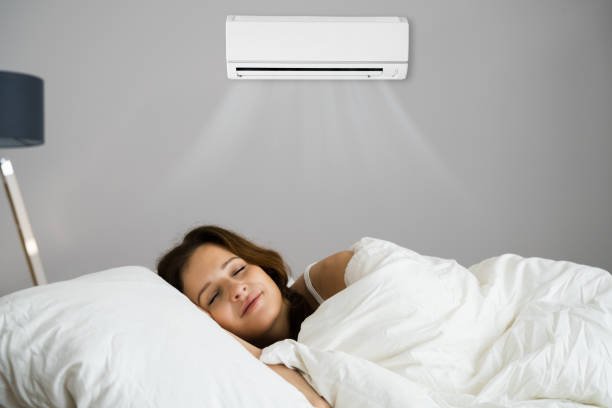
A reliable approach to ductless AC bedroom placement is to mark where heads will be when you sleep and avoid aiming airflow at that zone. That does not mean the unit must be far away, but it does mean you should prioritize indirect airflow, using the unit’s vane direction to sweep air across open space rather than directly onto pillows. When the sleep zone is protected from direct airflow, comfort typically improves, and people stop turning the system on and off, which also supports steadier performance.
Understand Airflow Barriers In The Room
Ductless AC bedroom placement should account for obstructions like tall dressers, wardrobe cabinets, bookcases, and even ceiling fans. These do not automatically rule out a location, but they can redirect air in unexpected ways. A unit that appears perfectly centered can still leave the far side of the room warm if a tall dresser blocks the primary air path. When ductless AC bedroom placement is planned with airflow barriers in mind, temperature becomes more even and the system can run at a lower, quieter output.
The Best Wall Mount Locations For Bedrooms
The most common choice for ductless AC bedroom placement is a high wall mounted indoor unit. This style works well in bedrooms because it can deliver a broad, gentle stream of air from above, and it keeps the unit out of the way of furniture. The best wall location is usually one that allows airflow to travel across the longest open span of the room before returning, which helps mix the air and avoid hot and cold pockets. In most bedrooms, that means mounting the unit on an exterior wall or a long interior wall where the air can sweep across the bed area without pointing directly at it.
Good ductless AC bedroom placement also considers installation realities. You need a practical path for refrigerant lines and drain piping, and you want a location where the outdoor unit connection does not force awkward bends or long line runs. From a service standpoint, you want enough clearance around the indoor unit for filter access and periodic maintenance. If you are planning a dedicated bedroom system, a Mini Split configuration is often ideal because it lets the bedroom be controlled independently and supports precise ductless AC bedroom placement choices.
Above The Door Is Often A Strong Option
In many bedrooms, ductless AC bedroom placement above the door or near the door wall works well because it aims airflow into the room rather than at the bed. This placement can also reduce the chance of airflow hitting the sleeper directly, especially if the bed is on the opposite side of the room. Above door placement can be especially effective when the door wall is relatively clear of tall furniture and the air can travel across the room.
On The Wall Opposite The Bed
Another proven ductless AC bedroom placement strategy is placing the unit on the wall opposite the bed, but slightly offset so the airflow sweeps past rather than directly at the mattress. When done correctly, the room can cool evenly while the occupant feels minimal direct air movement. This option works best when the opposite wall has open space and you can set vane direction for a soft, wide throw rather than a sharp stream.
Avoid The Headboard Wall When Possible
Most of the time, ductless AC bedroom placement on the headboard wall is risky because it increases the chance of direct airflow onto the sleeper. Even if the unit is high, the throw angle can still reach the bed, especially in smaller rooms. There are exceptions, such as when the bed is far from the wall or when airflow can be angled away, but as a general rule, it is better to keep the unit off the headboard wall unless layout constraints force it.
Height, Clearance, And Air Throw Rules That Matter
The technical side of ductless AC bedroom placement is not complicated, but it matters. A wall mounted unit needs sufficient clearance above and on the sides so it can draw air in and push air out efficiently. If clearance is too tight, airflow becomes noisy, performance drops, and comfort can become uneven. The unit also needs enough distance from corners so air can spread, and it should be placed where the air throw can travel across open space rather than immediately hitting a wall.
Ductless AC bedroom placement should also respect practical living details. You do not want the indoor unit directly above delicate artwork, electronics, or a frequently used closet door where condensation risk or airflow could cause nuisance issues. You also want to avoid placing the unit where the filter becomes hard to access, because a clogged filter is one of the easiest ways to make any ductless system louder and less effective in a bedroom.
Clearance Above The Unit
A simple rule for ductless AC bedroom placement is to keep adequate space above the unit, as specified by the manufacturer. This helps the unit breathe and reduces turbulence noise. When clearance is tight, the unit can still run, but it may sound harsher at night because airflow becomes less smooth. Proper clearance also helps keep ductless AC bedroom placement compatible with routine cleaning and long term reliability.
Avoid Corners That Trap Air
Corners can be problematic for ductless AC bedroom placement because they restrict the spread of air. If the unit is too close to a side wall, the air jet can bounce quickly and create a cold spot nearby while leaving the far side of the room warm. A better approach is to choose a location that allows the airflow to expand into the room. This improves mixing and helps the system regulate temperature accurately.
Think About Air Throw Across The Longest Open Path
A strong ductless AC bedroom placement approach is to aim airflow across the longest open path in the room. In many bedrooms, that is along the length of the room, not across the width. When air travels farther before it slows down, it mixes better with the room air. This helps create even cooling and reduces the sensation of a strong blast on one side of the bed.
Comfort And Sleep: How To Prevent Drafts At Night
The biggest complaint people have about ductless AC bedroom placement is drafts during sleep. A bedroom can feel comfortable when you are standing, but drafty when you are lying down because your face and shoulders are in the direct path of air. The fix is rarely “turn the system off.” The fix is choosing a ductless AC bedroom placement that keeps airflow indirect, then using fan speed, vane angle, and temperature strategy to maintain comfort quietly.
Humidity also affects sleep comfort. A room with high humidity can feel warm and sticky even at lower temperatures, which leads people to lower the setpoint and unintentionally increase airflow intensity. Better ductless AC bedroom placement paired with steady operation can improve dehumidification, which often allows a higher, more comfortable temperature setting while still feeling cool and dry.
Use Indirect Airflow Over The Bed
A smart ductless AC bedroom placement plan sets the airflow to wash across the ceiling or across open floor space, not straight at the bed. This helps the air mix and cool the room more gently. Many indoor heads have swing functions that can distribute air across a broader pattern. When you combine those settings with the right ductless AC bedroom placement, sleepers usually notice less direct air movement.
Match Fan Speed To Nighttime Needs
Even with correct ductless AC bedroom placement, fan speed matters at night. Many people sleep best when airflow is steady and quiet. If the system is oversized or if the fan speed is set high, the room may cool quickly and then cycle, which can feel inconsistent. Proper sizing and ductless AC bedroom placement reduce this risk, and a modest nighttime fan setting often keeps the room comfortable without noticeable drafts.
Consider Doors, Curtains, And Ventilation Habits
Bedroom doors and blackout curtains change airflow and humidity patterns. If you keep the door closed all night, the bedroom becomes its own microclimate and ductless AC bedroom placement becomes even more important. Health Canada notes that ventilation helps remove indoor pollutants and bring in fresh air, which matters when rooms remain closed for long periods. This does not mean you should sleep with windows open in all seasons, but it does mean you should consider how your home handles fresh air and humidity when planning ductless AC bedroom placement.
Where Not To Put A Bedroom Ductless Unit
Some locations look convenient but create long term issues. Ductless AC bedroom placement should avoid areas where airflow will be blocked, where condensation could cause problems, or where noise will be more noticeable. You also want to avoid placements that force complicated piping routes, because poor drainage routing can lead to water issues and poor line routing can complicate service.
Another “do not” is placing the indoor unit in a spot where it reads temperature inaccurately. If a unit is mounted near a heat source or in a dead air corner, it may think the room is cooler or warmer than it really is. That can cause uneven comfort and higher energy use. Correct ductless AC bedroom placement helps the unit sense the room properly so it can run smoothly.
Directly Above The Bed
Placing the unit directly above the bed often creates the strongest draft risk and can become a nightly annoyance. Even if you adjust vanes, the air can still cascade down. This is why ductless AC bedroom placement above the bed is usually a last resort. If it must be done, it should be paired with careful airflow direction and possibly different indoor unit style choices.
Behind Tall Furniture Or Inside Nooks
If airflow cannot spread freely, comfort will suffer. Ductless AC bedroom placement behind tall furniture, inside tight wall nooks, or near heavy drapes can restrict airflow and reduce performance. It also makes filters harder to clean, which can increase noise. A better plan is to place the unit where the air can travel unblocked and where maintenance is easy.
Near Heat Sources Or Electronics Clusters
Bedrooms often have TVs, gaming consoles, chargers, and sometimes even small fridges. Ductless AC bedroom placement near concentrated heat sources can confuse temperature sensing, which can cause the system to run more than needed. A location away from these heat sources usually supports steadier operation and more predictable comfort.
One Quick Placement Checklist You Can Use
If you want a fast way to evaluate ductless AC bedroom placement, use a checklist that balances comfort and installation practicality. The best choice typically hits multiple criteria: indirect airflow relative to the bed, strong air circulation path, clean line set routing, and easy filter access. This is where professional guidance helps, because installers who understand bedroom comfort will often see issues that are easy to miss on a simple floor plan.
Also consider how the bedroom fits into the rest of the home. If the bedroom system is part of a multi room plan, ductless AC bedroom placement should be coordinated with the broader design. In some homes, a Ductless Heat Pump plan is used to handle both heating and cooling, while Ductless Air Conditioning may be used for targeted cooling zones. Either way, ductless AC bedroom placement should support stable airflow and quiet operation.
List Of Bedroom Placement Mistakes
Here is a random list of mistakes that commonly lead to poor ductless AC bedroom placement, even when the equipment itself is high quality.
Mistakes To Avoid
- Aiming airflow directly at the pillow line
- Mounting too close to a corner that traps air
- Choosing a location that forces a long, awkward drain route
- Installing above a closet door that is opened frequently
- Blocking the return path with tall dressers or shelving
- Setting the unit where a ceiling fan disrupts air distribution
- Mounting near a TV wall where heat loads distort sensing
- Ignoring where blackout curtains hang and block airflow
System Type Matters: Single Zone, Multi Zone, And Brand Options
Ductless AC bedroom placement works best when the system type matches the bedroom’s needs. A single zone system dedicated to one bedroom is often the simplest way to get precise control and a quiet, stable environment. Multi zone systems can also work well, but the design must consider how multiple rooms call for cooling at different times. If the outdoor unit is serving several heads, ductless AC bedroom placement in the bedroom should still prioritize sleep comfort, but the system must also be sized and configured to handle the combined load smoothly.
Brand and model features can also influence ductless AC bedroom placement decisions. Some systems offer excellent low fan performance, advanced vane control, and very quiet indoor operation, which can be ideal for bedrooms. Homeowners often explore premium configurations such as Mitsubishi Electric M-Series when they want refined comfort control and quiet nighttime operation. The key is not the brand alone, but how the equipment features support ductless AC bedroom placement goals like indirect airflow and low sound levels.
Quiet Operation Factors That Affect Bedrooms
Bedrooms highlight every sound. Even with perfect ductless AC bedroom placement, a system can seem noisy if fan speed is too high or if airflow is turbulent due to poor clearance. Proper sizing, proper clearance, clean filters, and a sensible ductless AC bedroom placement location can reduce perceived noise dramatically. When the system can run steadily at low output, it often becomes background quiet.
Cooling Only Vs Heat Pump In A Bedroom
Some homeowners want cooling only in a bedroom, while others want year round comfort. If you use a heat pump for heating and cooling, ductless AC bedroom placement becomes a year round decision because airflow direction affects both summer cooling and winter heating. Natural Resources Canada explains how electric heat pumps can deliver efficient heating and cooling, which is why many homeowners consider them for comfort upgrades. When planning for both seasons, ductless AC bedroom placement should avoid drafts in summer and also avoid blowing warm air directly onto sleepers in winter.
Why Choose Go Ductless Inc.
Go Ductless Inc. approaches ductless AC bedroom placement as a comfort and performance problem, not a “where can we fit the unit” problem. Bedrooms need quiet airflow, steady temperature control, and an installation layout that avoids drainage issues and service headaches. That is why we focus on placement strategy, sizing, and system selection together. When ductless AC bedroom placement is done thoughtfully, the system can run at lower output more often, which typically improves comfort, reduces noise, and supports better efficiency.
We also help homeowners connect bedroom comfort to the right service solution. For many homes, a dedicated Mini Split is a clean way to create a perfect sleep environment. For homes planning whole home comfort, a Ductless Heat Pump design can cover multiple zones with efficient heating and cooling. If the priority is summer relief in sleeping areas, Ductless Air Conditioning planning can target the rooms that matter most. For homeowners who want premium control options, Mitsubishi Electric M-Series configurations are often considered as part of a comfort focused design. The goal is always the same: ductless AC bedroom placement that feels natural to live with, night after night.
Two Helpful Government Resources
Health Canada provides guidance on improving indoor air quality in homes, including the role of ventilation, which can matter when bedrooms remain closed for long periods. Natural Resources Canada also provides information about electric heat pumps and how they deliver efficient heating and cooling, which can be helpful when deciding between cooling only and heat pump options.
Get Expert Help With Ductless AC Bedroom Placement From Go Ductless Inc.
The best ductless AC bedroom placement protects the sleep zone from direct drafts, allows air to travel across the room for even mixing, and supports quiet low speed operation. If you start by mapping the bed position and airflow barriers, then choose a high wall location with proper clearance and a clear air throw path, you will usually end up with a bedroom that cools evenly without annoyance. Most placement problems come from aiming airflow at the bed, mounting too close to corners, or ignoring the practical realities of drain routing and maintenance access.
If you want help choosing the right system and the right spot, Go Ductless Inc. can guide you through a comfort first design. Whether you are planning a dedicated Mini Split for a single bedroom, integrating a Ductless Heat Pump for year round control, adding targeted Ductless Air Conditioning, or exploring Mitsubishi Electric M-Series options, we will recommend a ductless AC bedroom placement plan that fits your room layout and how you actually sleep.
Frequently Asked Questions
1) What Is The Best Ductless AC Bedroom Placement To Avoid Drafts?
The best ductless AC bedroom placement usually keeps the unit off the headboard wall and directs airflow across open space so it does not blow directly on the bed.
2) Can Ductless AC Bedroom Placement Be Above The Door?
Yes, ductless AC bedroom placement above the door can work well if it provides a clean air path into the room and keeps airflow indirect relative to the bed.
3) How High Should Ductless AC Bedroom Placement Be On The Wall?
Ductless AC bedroom placement is typically high on the wall with proper manufacturer clearance above and on the sides so airflow is smooth and service access is easy.
4) Does Ductless AC Bedroom Placement Change If I Use A Heat Pump?
Yes, ductless AC bedroom placement should consider both cooling and heating airflow patterns when the unit is part of an electric heat pump system.
5) Is Ductless AC Bedroom Placement Different For Small Bedrooms?
In small rooms, ductless AC bedroom placement should be extra careful to avoid aiming airflow at the bed and to avoid corners where air throw cannot spread evenly.
6) Can Furniture Ruin Ductless AC Bedroom Placement?
Yes, tall furniture or heavy curtains can block airflow and reduce comfort, so ductless AC bedroom placement should ensure the unit has a clear air path.
7) What If My Only Option For Ductless AC Bedroom Placement Is Above The Bed?
If ductless AC bedroom placement above the bed is unavoidable, vane direction and fan speed settings become critical, and you should plan for indirect airflow to reduce drafts.